
Teenagers. Judo. The Netherlands.
 At the beginning of 2024, our partner organization from the Netherlands, the West-East Bridges Foundation, approached us with a proposal to become a partner in a project involving teenagers. The idea was that at a young age, teenagers from Armenia and Georgia should be able to see how people live and work in the Netherlands.
In our previous projects, when we needed young participants for international conferences held in The Hague, Netherlands, we chose youth and student activists from Armenia. This time we had to decide what kind of teenagers should take part in such a project.
We decided they should be athletes, and that the sport not only had to be popular in Armenia, Georgia and the Netherlands, but also reflect the values shared by young people in these countries. It was decided to invite young judoka aged 13–14. We chose judo because it is equally popular in the Netherlands, Georgia and Armenia. But while in Armenia and Georgia boys often practice wrestling to be physically strong and able to defend themselves, in the Netherlands teenagers practice judo to be healthy and strong in spirit.
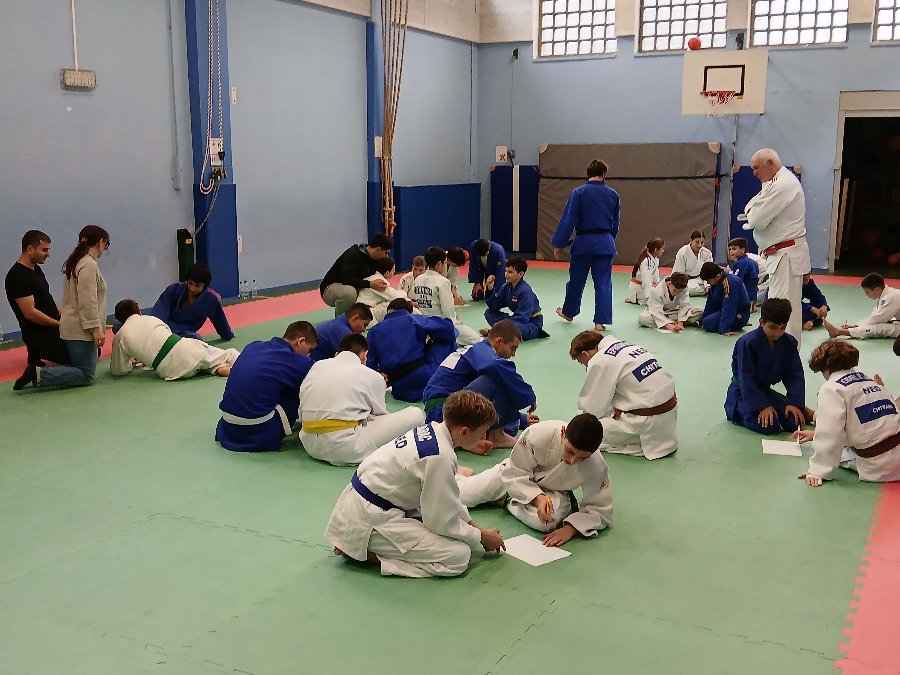 As a first step, a meeting was arranged between representatives of International Relations Development Armenia and the legendary Dutch judoka Richard de Bijl at his club in the town of Spijkenisse, not far from Rotterdam. Richard turned out to be a very warm and welcoming person. He showed us his club and even allowed our representative to join a training session. Most importantly, he confirmed that his club would take part in our project.
In May 2025, the Dutch Erasmus+ agency approved the project “Teenagers, Sports and European Values,” submitted by the West-East Bridges Foundation in cooperation with our organization and our partner organization from Georgia, JA Georgia.
The Netherlands is one of the most expensive countries in Europe, and our organizing team had to invest a lot of time and effort into solving practical issues. The most important of these was the safety of the teenagers, many of whom were traveling for the first time on such a long trip without their parents. It soon became clear that our decision to invite teenage athletes was the right one. The young judoka behaved with dignity, listened to their coaches and treated adults with respect.
Each country was represented in the project by ten teenagers, two coaches and a representative of the partner organization. Even before the project began, we explained to the coaches from Armenia and Georgia that our goal was not for their young athletes to demonstrate their skills on the tatami, but to create opportunities for them to communicate with their peers from the Netherlands, to understand how they live there, how they study and what they are interested in.
That is why the Armenian group did not consist of members of the national team, but of athletes from the Thunder sports club in Avan, which in its size and distance from the center of Yerevan is similar to the judo club from the Dutch town of Spijkenisse. Richard de Bijl did the same on his side. Two girls from his club – both judoka – also took part in the project. The boys from Armenia and Georgia treated them with particular politeness and respect.
Among the ten young judoka from Georgia, three were already champions of Georgia. One of them, tall and long-haired Saba, was already a four-time champion of Georgia.
 Unfortunately, there are no direct flights from Armenia or Georgia to the Netherlands. We had to fly on night flights, with layovers in other countries. Rotterdam greeted us with overcast skies and a light drizzle.
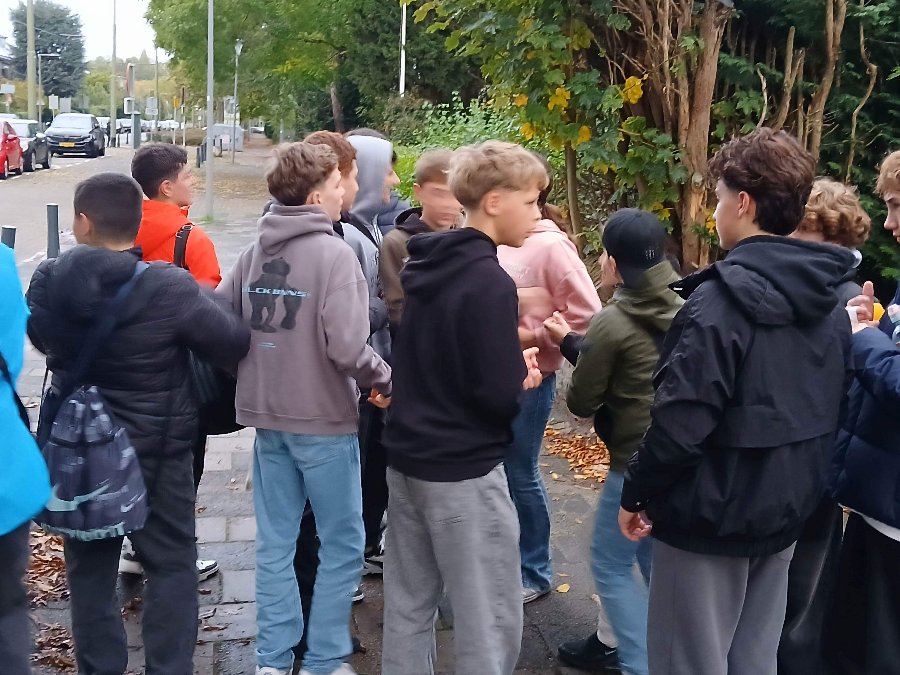
On the morning of October 19, in Rotterdam, the rain had stopped. The participants were divided into three mixed groups and received their first task: to walk to the local judo club. According to the map, the walk was not supposed to take more than an hour.
The young judoka from Armenia and Georgia were asked to film on their phones everything that, in their opinion, was different from what they see in their own cities. The Dutch judoka were asked to film what looked different from the traditional Dutch style. The coaches accompanied the teenagers, but we asked them not to prompt the young people on how to find their way.
All the Dutch teenagers were from Spijkenisse and therefore did not know Rotterdam very well either. So, in the search for the local judo club, everyone had the same chances.
It should be noted that the young Dutch judoka spoke English fluently, which could not be said about their peers from Armenia and Georgia. But, as we know, sport brings people together. And Google Translate can always help you find the right words in English. On top of that, the coaches and representatives of the partner organizations spoke English well, and the Georgian coaches also spoke Armenian fluently. All three groups successfully reached the judo club.
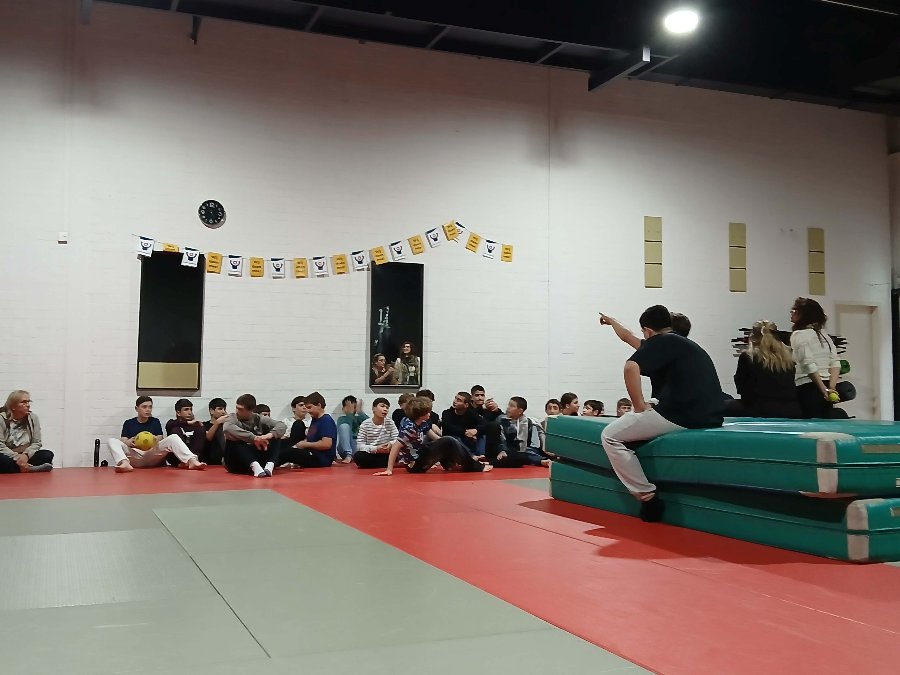
First, we organized interactive team-building games for the teenagers. There were also sports games. One of the most successful turned out to be a competition in throwing a ball precisely at a basketball backboard. All the judoka took part, both older and younger. One unsuccessful throw and the athlete was out of the game. To everyone’s surprise, the winner of this contest was a 13-year-old boy of small stature.
 After that, Richard de Bijl and his colleagues conducted the first joint training session. Richard holds an 8th dan in judo. He is an excellent coach.
As it turned out, judo training in the Netherlands differs from training in Armenia and Georgia in that coaches talk more, joke a lot and smile often. The trip back to the hotel took only ten minutes by tram.
The next two days followed the same pattern. In the morning there were interactive activities and team-building exercises. If the weather allowed, they were held outdoors. Then came lunch, followed by a tram ride to the judo club. There a joint training session was held, and afterwards they had dinner.
The organizers tried to arrange dinners in different restaurants with different cuisines – Dutch, Italian, Japanese, Turkish.
 ver these days it became clear how Dutch judo differs from Georgian and Armenian judo. Around 50,000 people are registered with the Judo Federation of the Netherlands. In the Armenian federation there are only a few thousand, and roughly the same in Georgia. At the same time, Georgia became the world team champion in judo this year!
The thing is that in the Netherlands most athletes practice judo not to win competitions, but to stay healthy and to enjoy the sport itself. As a result, in Armenia and Georgia most teenagers give up sports after finishing school, because they already understand that they will not achieve major success. In the Netherlands, however, people practice judo from the age of 5 to 80.
In the Caucasus, it is believed that a man must be able to defend himself. The ability to throw an opponent to the ground is highly valued. As a result, even at sessions of the National Assembly of Armenia we sometimes see real wrestling matches. Georgia this year has seen numerous clashes between the opposition and the ruling party.
One of the most important European values is the desire and ability to resolve disputes through dialogue. In the Netherlands, people have long since learned how to find common ground with one another.
Questionnaires among teenagers from Armenia and Georgia showed that they liked the cleanliness and order in Dutch cities. They appreciated the fact that the standard of housing and other buildings in the city center and on the outskirts does not differ much.
 Of course, 30 teenagers, and wrestlers at that, cannot help fooling around from time to time. Children are loved in the Netherlands not less than in the Caucasus, of course. We did not receive a single complaint. On the contrary, people treated the children with great kindness.
On the other hand, at the Olympic Games medals are awarded for victories, not for the number of people engaged in a sport. In the Netherlands, there is the opposite problem: there are relatively few teenagers who strive to become great athletes. So, it turns out that the leadership of the Judo Federation allocates significant funds for the development of the sport, yet there have been no major results in recent years.
Thanks to Richard de Bijl, word about the young judoka from distant countries, who know how to fight and want to become champions, spread far beyond Rotterdam. Already at the second joint training about six new young judoka and their coaches from other clubs joined us. A couple of days later, even more local young judoka came.
Along with them came Guillaume Elmont, the 2005 judo world champion. He is now a prominent figure in the Judo Federation of the Netherlands. He greeted the young judoka and noted that such joint training sessions and opportunities for young athletes to interact with each other are very valuable for Dutch youth.
The fourth day was the most memorable. On that day the activities and training were supposed to take place at Richard’s club in Spijkenisse. It turned out that the mayor of Spijkenisse had learned about our project and invited us to the town hall.
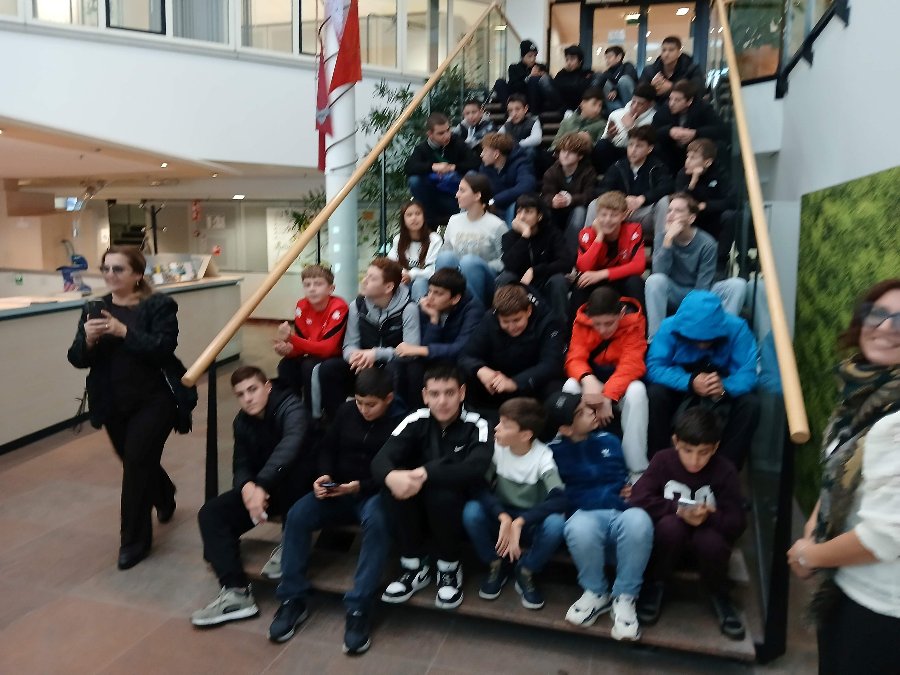
By that time, the participants from different countries had already gotten to know each other well. From Rotterdam to Spijkenisse we traveled by train. The town hall turned out to be a large and beautiful building.
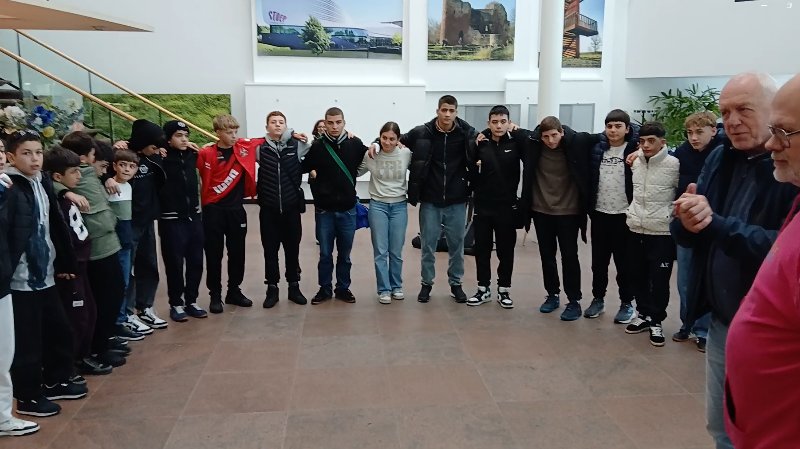
The young athletes stood in a semicircle in front of the mayor, with their hands on each other’s shoulders, and greeted him in the traditional judo manner – with a bow as a sign of respect.
 The mayor and municipal staff were very pleased with our visit. They gave the young athletes souvenirs and invited them to come again. Information about our visit was published on the town hall’s website.
After lunch we were scheduled to visit Richard de Bijl’s judo club. We walked through Spijkenisse on foot. Richard gave us a real guided tour. We were shown the classic Dutch countryside, with a windmill, canals and small, beautiful houses.
After about half an hour we reached Richard’s club. One can only dream of having such excellent sports clubs in Echmiadzin or Ashtarak – not only cozy and spacious, but also aesthetically pleasing. Once again we organized team-building games for the young judoka.
Then we walked to another club, headed by one of the coaches of the Dutch national judo team. This time he led the training session. At this club we were joined not only by young, but also by several adult judoka.
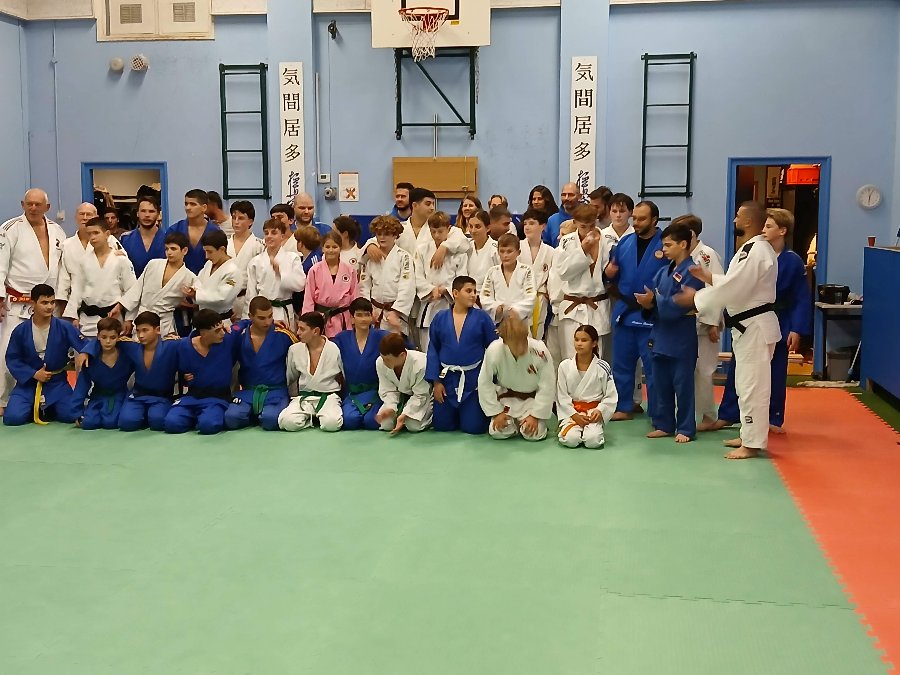
One wall of the training hall was made of glass, and behind it a large group of coaches and parents gathered. It turned out that they had come to watch how the young athletes from Georgia and Armenia train and fight. At this session there were both young and already more experienced judoka who successfully compete in the Netherlands.
At the request of the West-East Bridges Foundation, no official contests were held during these training sessions. Once again, all over the tatami young judoka were sparring with each other, but no one was evaluating the results of their bouts and no one was declared the winner. Every few minutes the judoka changed partners.
 It appeared to be the time of glory moment of Saba from Georgia. The 14-year-old boy threw his older and heavier opponents onto the tatami in a matter of seconds. It was another triumph for the Georgian school of judo. Of course, other athletes from Georgia and Armenia also managed to show their skills.
That day the parents of the Dutch children saw a completely different kind of judo – very beautiful and exciting. It was the last day on which the young participants of the project trained.
he following day was entirely devoted to walks and informal communication among the young judoka. By then, they no longer walked the streets of Rotterdam in their original national groups as on the first day, but in mixed groups. It was the only sunny day during our entire stay in the Netherlands.
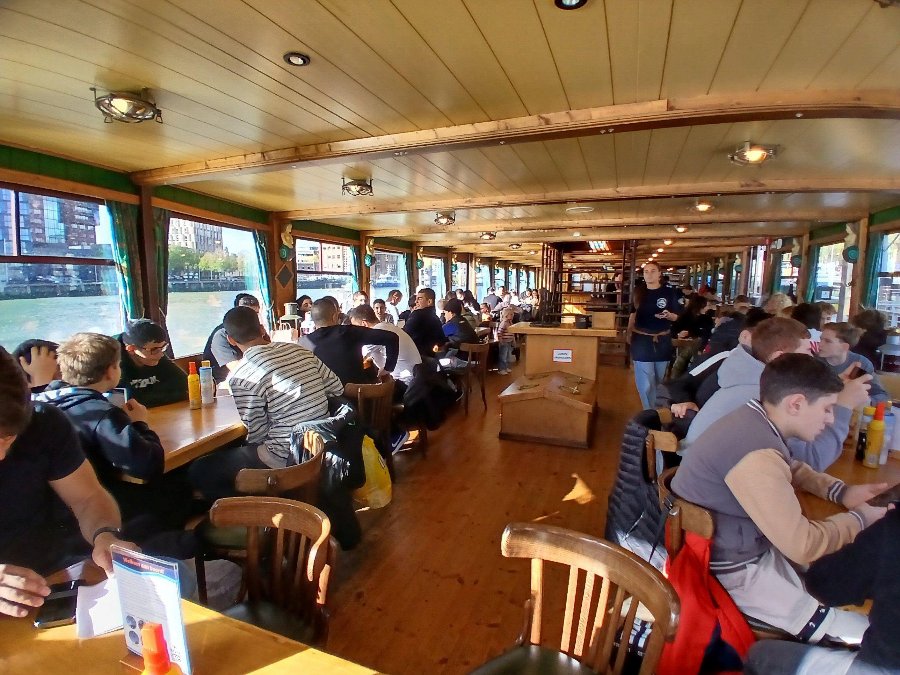
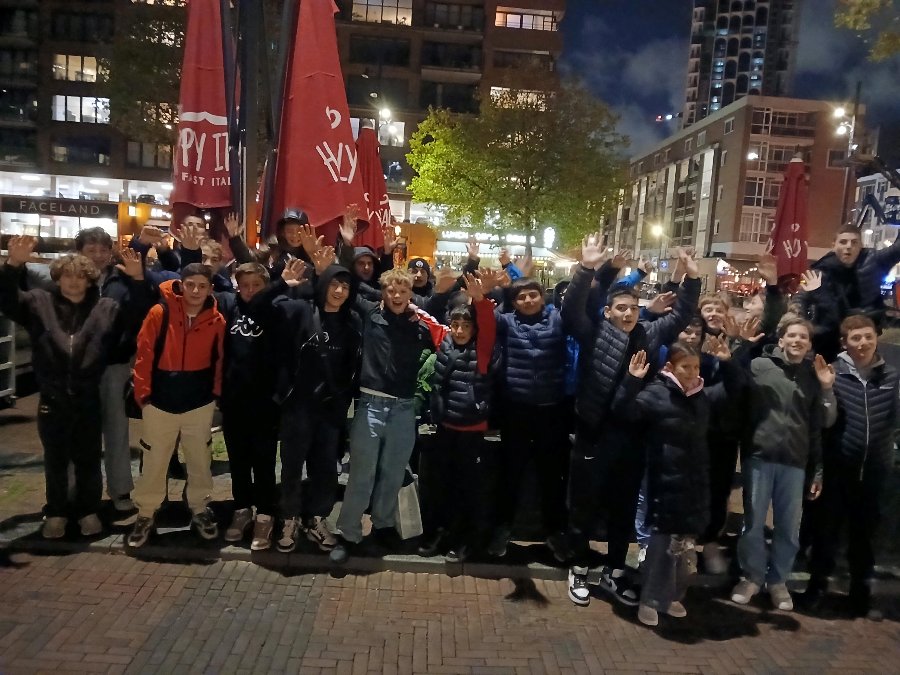
The highlight of the day was a boat trip on the river, where we were treated to a variety of delicious pancakes. Everyone could eat as many pancakes as they wanted. The boat trip was sponsored by Richard de Bijl. Afterwards, the participants visited an entertainment center in Rotterdam.
The next evening the Armenian and Georgian teams flew home. It was time to sum up the results. The young judoka from the Netherlands would like to come and visit their new friends form Armenia and Georgia. The farewell scene was long and very moving.
In this project we wanted to use sport not to determine the strongest, but to help teenagers from different countries communicate and become friends and we succeeded. It was wonderful.
The InRed Team